
A Complete Guide to Improving Google Rankings and Growing Your Business

DIGITAL LEAD NOVA
Published On Oct 15, 2026 15:40 IST
Introduction
Having a website does not automatically bring customers. You could have excellent products, useful services, and an attractive design, yet potential customers might never find you. That is where search engine optimization becomes important.
SEO makes your website content easier for search engines to understand, helping them identify relevant pages that may match users’ search queries. Rather than focusing only on higher Google rankings, effective SEO aims to attract relevant visitors, provide valuable information, and encourage them to explore your website or become customers.
SEO is not magic, and anyone promising guaranteed first place rankings probably deserves a few difficult questions. SEO requires consistent effort over time, including creating valuable content, fixing website issues, researching relevant keywords, and improving the overall user experience.
What Is Search Engine Optimization?
Search Engine Optimization (SEO) involves improving a website’s content, structure, and technical setup to help search engines understand its pages and users find relevant information.
Improve local visibility: For example, a digital marketing agency in Pune can target businesses searching for SEO services in the city by creating relevant service pages and providing accurate contact information.
Create helpful content: Publishing informative articles, sharing industry insights, and answering common customer questions can help attract relevant visitors.
Optimize website performance: A well-structured website with clear navigation, good technical performance, and accessible pages makes it easier for both users and search engines to explore the content.
Focus on user needs: Successful SEO goes beyond keyword placement. It requires understanding search intent, providing valuable information, and delivering a positive user experience.
Build long-term visibility: Combining relevant content, technical improvements, and a user-friendly website helps businesses strengthen their organic search presence and reach potential customers.
How Does Search Engine Optimization Work?
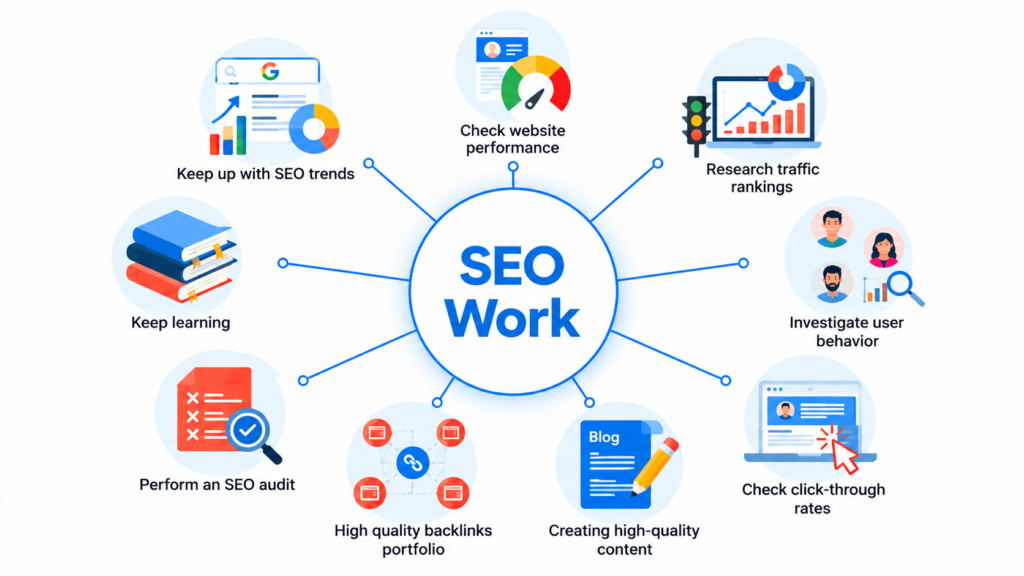
Search engines use automated systems to discover webpages, crawl their content, store eligible information in an index, and select relevant results for each search.
Crawling
Search engines locate webpages by following links across websites and using various methods to discover new or updated content. Internal links help crawlers move between related pages, while an XML sitemap can provide information about important URLs.
Submitting a sitemap can help search engines discover your website’s URLs, but it does not ensure that all pages will be visited by crawlers.
Indexing
Once a webpage is discovered, search engines assess its content and determine whether it qualifies for inclusion in their search index. Duplicate content, technical restrictions, and other quality issues can affect this process.
Ranking
When someone searches for a topic, search engines arrange results according to relevance and many other signals. Helpful content, clear page structure, and a good user experience can support visibility, but no single technique guarantees a top position.
Main Benefits of Search Engine Optimization?
More Relevant Website Traffic
SEO can connect your website with people actively searching for information, products, or services related to your business. Focusing on relevant search terms helps attract visitors who genuinely need your products or services, increasing the chances of meaningful engagement and potential conversions.
Stronger Brand Credibility
Many customers look into a business, compare their options, and evaluate its credibility before deciding to get in touch or make a purchase. Useful content, accurate business information, transparent policies, and genuine customer reviews can help build confidence.
Long Term Marketing Value
A useful webpage may continue attracting visitors long after publication. Still, SEO requires maintenance because competitors update their content, customer needs change, and search results evolve.
Better Business Insights
Google Search Console and Google Analytics help businesses track search performance, visitor activity, and website conversions. By reviewing this data, they can identify areas for improvement and make their website content and navigation more user friendly.
Essential Types of SEO
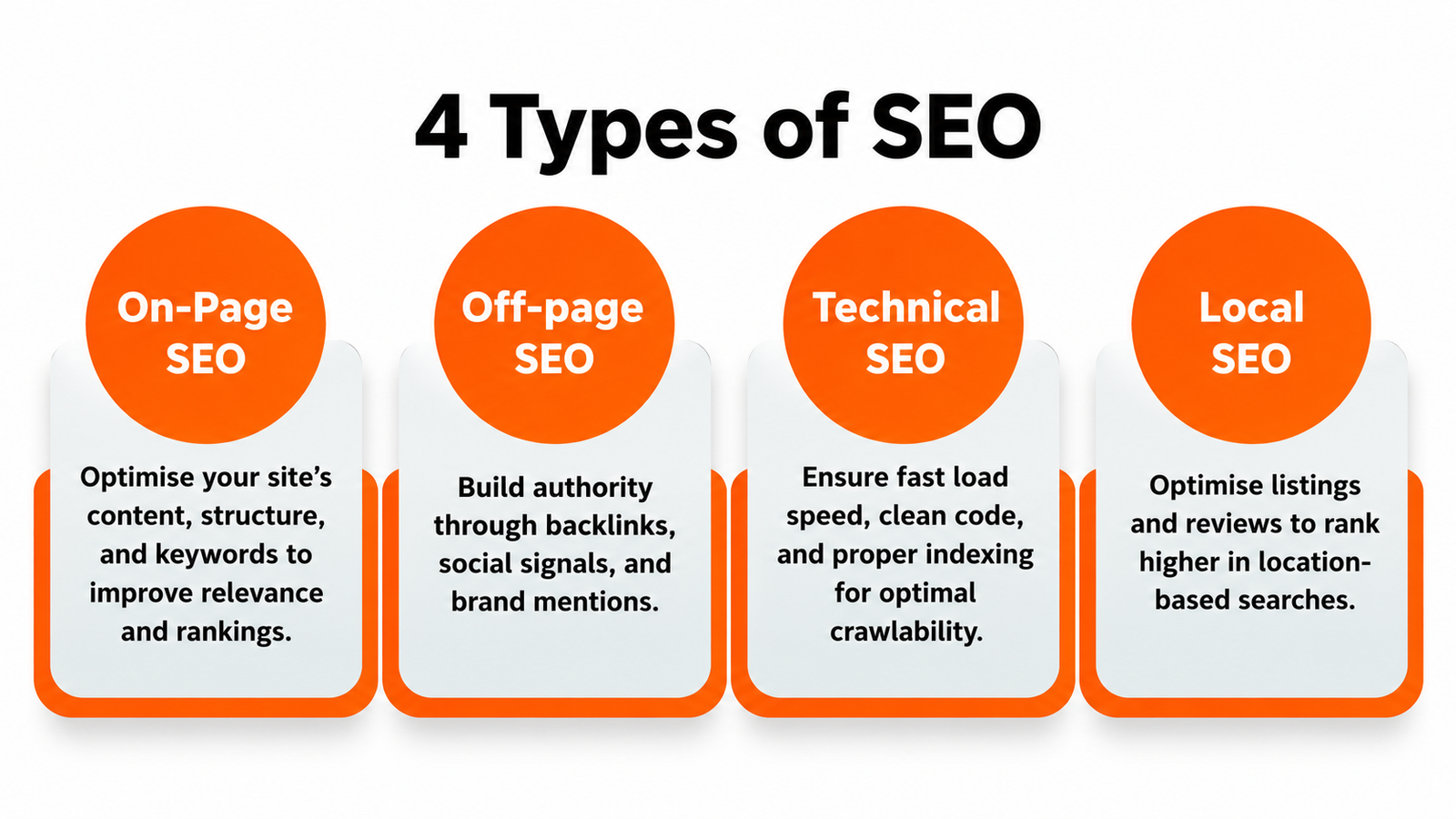
On Page SEO: Improves page titles, headings, content, image descriptions, and internal links.
Technical SEO: Focuses on crawling, indexing, site speed, mobile usability, and website structure.
Off Page SEO: Builds reputation through relevant mentions, genuine recommendations, and quality backlinks earned naturally.
Local SEO: Improves a business’s presence in local search results by maintaining accurate business information, creating location focused website content, and optimizing its Google Business Profile when relevant.
Essential Types of Search Engine Optimization
On Page SEO: Improves page titles, headings, content, image descriptions, and internal links.
Technical SEO: Focuses on crawling, indexing, site speed, mobile usability, and website structure.
Off Page SEO: Builds reputation through relevant mentions, genuine recommendations, and quality backlinks earned naturally.
Local SEO: Improves a business’s presence in local search results by maintaining accurate business information, creating location focused website content, and optimizing its Google Business Profile when relevant.
Practical Steps to Improve SEO
Research Keywords
Identify what your audience searches for and why. Someone searching for “what is SEO” likely wants an explanation, while someone searching for “SEO services in Pune” may be comparing providers.
Create Helpful Content
Create content that addresses genuine user queries through straightforward explanations, practical examples, and reliable information. Use keywords naturally instead of repeating them until the article sounds like a broken record.

Fix Technical Issues
Check whether important pages are accessible to search engines, load properly, work on mobile devices, and use HTTPS. Review broken links and unintended indexing restrictions.
Improve Internal Linking
Connect related pages using descriptive link text. Internal links connect relevant pages across your website, allowing visitors to access related information easily and helping search engines navigate your site more efficiently.
Measure Results
Monitor clicks, impressions, relevant traffic, enquiries, and sales. Rankings matter, but a high position that produces no meaningful business results is not much of a victory.
Common SEO Mistakes
Avoid publishing content without understanding search intent, copying competitors, buying manipulative backlinks, ignoring technical problems, and expecting overnight success.
Also, do not confuse content length with quality. A useful article should answer the reader’s question, not stretch a simple explanation to meet an arbitrary word count.
How to Measure SEO Performance
Track performance indicators that show how your search visibility contributes to business growth and measurable outcomes.
Organic clicks: Visits from unpaid search results.
Impressions: The number of times your website pages are displayed in search engine results.
Click Through Rate (CTR): The proportion of search result impressions that lead users to click on your website.
Conversions: Enquiries, purchases, or other valuable actions.
Lead quality: Whether organic visitors become relevant prospects or customers.
For example, more traffic is not necessarily a success if visitors have no interest in your services. Measure what contributes to your actual business goals.
FAQ
SEO can improve online visibility, attract relevant visitors, support brand credibility, and create opportunities to generate leads and sales.
SEO improvements can become visible within a few months, depending on your website’s condition, competition, content quality, and optimization strategy. Consistent monitoring and regular improvements can help strengthen organic search performance over time.
Search engine optimization involves refining a website’s content and structure so search engines can interpret its pages and users can find them in unpaid search results.
Organic search listings do not require payment for each click. However, SEO still requires time, expertise, tools, content creation, and ongoing website improvements.
Small businesses can attract nearby customers by optimizing for local search terms, addressing common customer needs, and publishing dedicated pages for their products or services.
Google Search Console’s URL Inspection tool can show indexing information for individual URLs. A site: search can provide a rough indication, but it is not a complete indexing report.
CTA
Want to understand your website’s SEO performance? Start by reviewing your key pages, organic search data, and technical health. A focused audit can help you identify the next steps for sustainable growth.